A Beginner’s Guide to Pastry Types and Their Names
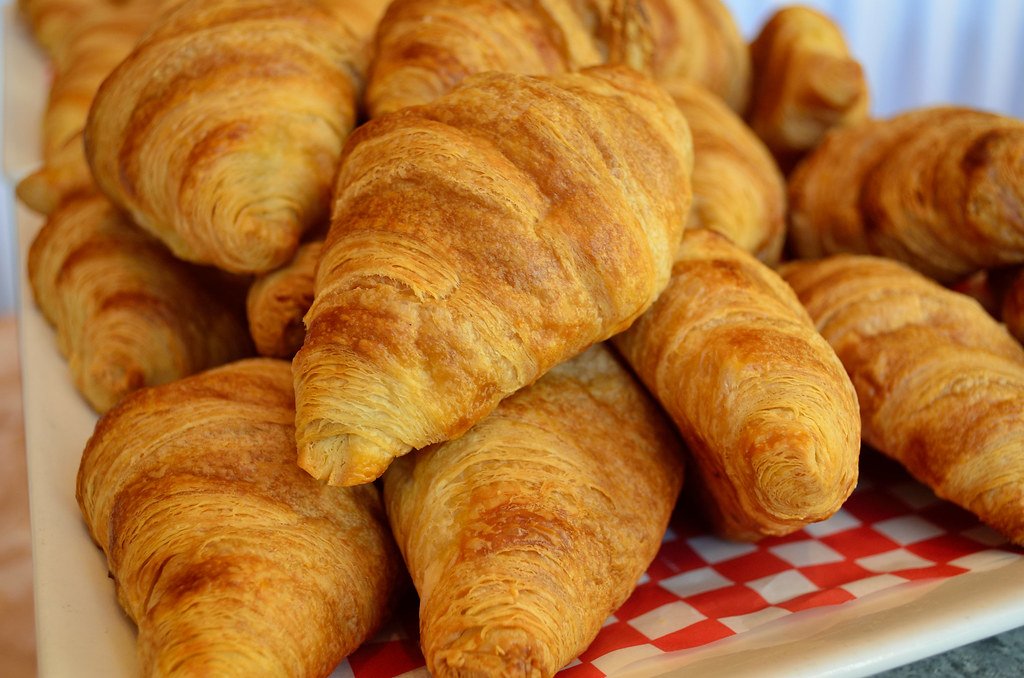
Walk into any bakery and you’ll see a glass case full of golden, flaky, sugar-dusted things, and half the labels might be in French. If you’ve ever pointed and said “one of those, please,” you’re not alone. This pastries list is a good companion for browsing, and the guide below explains the basics in plain language.
The three doughs behind most pastries
Almost everything in that display case comes from a handful of doughs. Understanding them makes the whole menu less confusing.
Puff pastry is made by folding butter into dough again and again, so it rises into hundreds of thin, crisp layers. Napoleons, palmiers, and turnovers all use it. Shortcrust is crumbly and tender, closer to a cookie, and it’s the base for tarts and quiches. Choux is the odd one out, because it’s cooked on the stove first and then baked. It puffs into hollow shells that are perfect for filling, like éclairs and profiteroles.
Croissants and their relatives
The croissant is made from laminated dough, which is similar to puff pastry but with yeast added. That’s why it’s airy and a little chewy, not just crisp. Pain au chocolat uses the same dough rolled around a couple of dark chocolate sticks. Danish pastries borrow the idea, but they’re richer and often topped with fruit, custard, or almond paste.
If you see a pastry shaped like a snail, that’s probably a pain aux raisins, with swirls of custard and raisins. A twisted, glossy one might be a cinnamon roll or a kouign-amann, a salted caramelized Breton treat that’s hard to resist.
Filled and fancy
An éclair is a long choux pastry filled with cream and topped with icing. A cream puff is its round cousin. A mille-feuille, which means “a thousand leaves,” stacks puff pastry with pastry cream and sometimes a feathered glaze on top. Cannoli come from Sicily, with a fried tube shell and sweet ricotta filling. Each one has a distinct texture, so it’s worth trying a few.
For more ideas to explore, nickbitz.com has naming lists across all sorts of food themes, which is handy if you’re writing a menu or just curious.
Tarts, pies, and handhelds
Tarts have a shallow, crimped crust and a fruit or custard filling, like a lemon tart or a Portuguese pastel de nata with its blistered top. Pies tend to be deeper and may have a lid. Turnovers and empanadas are folded pastries that you can eat with one hand, and they carry both sweet and savory fillings around the world, from apple to spiced beef.
Tips for choosing at the counter
If you’re not sure what to order, ask what’s freshest. Many bakeries bake their laminated items in the morning, and the difference between warm and a few hours old is big. Look for a deep golden color and visible layers, which usually means the baker took care with the dough.
Don’t be afraid to ask questions. Bakers generally love talking about what they make, and they’ll often tell you which item is the favorite of regulars. You might discover something you’d never have picked on your own.
Making them at home
You don’t need to start with the hardest recipes. Palmiers are surprisingly easy with store-bought puff pastry, and they only need sugar and a hot oven. Choux takes a little patience, but once you’ve seen it puff, you’ll want to make it again. Keep your butter cold, don’t rush the resting time, and use a kitchen scale if you have one.
The more you try, the more the names start to make sense, and soon you’ll be reading a bakery menu like a pro. Whether you’re shopping or baking, knowing the basics turns a confusing case of treats into a very good problem to have.